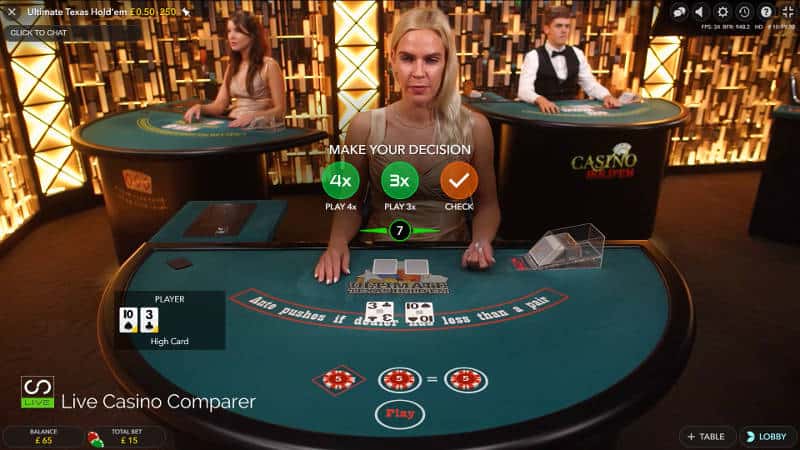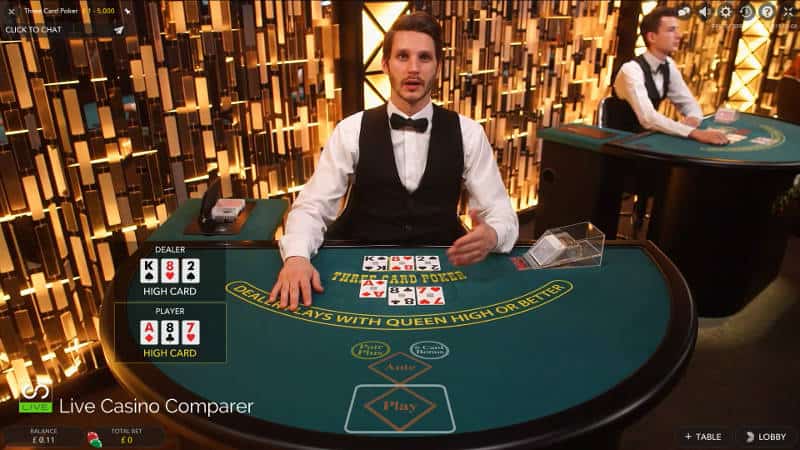
Somewhere in a studio tonight, a dealer named Anna is shuffling for a baccarat table full of Filipino players. In the server room next door, a piece of software is dealing the same game a thousand times a minute with no hands at all. Between the two sits an expanding family of hybrids: automated wheels with human hosts, AI voices reading results in three languages, camera systems directed by algorithms instead of people. The live casino of 2026 isn't "human versus machine" — it's a spectrum, and every point on it is available in your pocket.
The interesting question for a mobile player isn't which side wins. It's what each format actually changes — in pace, in cost, in trust, in feel — and which one fits the session you want tonight. This guide maps the spectrum as it exists at VOSLOT.APP, with the practical trade-offs the marketing copy skips.
The Spectrum, Mapped
| Format | Who Deals | Who Hosts | Examples in the Lobby |
|---|---|---|---|
| Classic live | Human | Human | Evolution Live Baccarat, blackjack tables |
| Automated live | Machine (real equipment) | Human presenter | Auto-shaker sic bo, game shows |
| Fully automated | Machine (real equipment) | None or AI voice | Auto roulette wheels |
| First Person / RNG | Software | None | First Person tables |
The first three are all "live" in the meaningful sense — real cards, real wheels, real physics on camera. The fourth is a rendered game with certified RNG math, covered fully in our live dealer vs RNG comparison. What AI has done is blur every boundary in between.
What Humans Still Do Better
Trust through visibility. A human hand cutting a shoe on camera answers the fairness question at a gut level no certificate can reach. For many Filipino players — especially those who grew up around real tables — watching the deal is the product.
The social layer. Dealers greet regulars, react to big wins, keep chat alive. On a phone at midnight, that thread of human contact is a genuine part of why live baccarat outsells its RNG twin many times over.
Pacing as hospitality. A good dealer reads the table's mood and breathes with it — slowing for suspense, brightening after a brutal run. Machines execute tempo; humans perform it.
What the Machines Do Better
Speed and uptime. Automated wheels and shakers never tire, never misdeal, never call in sick. Fully automated tables run around the clock at paces human ergonomics can't sustain — and at lower operating cost, which is why their minimum bets often sit lowest in the lobby.
Perfect procedure. The auto-shaker cannot be accused of technique; the automated wheel launches with calibrated randomness every time. For players who distrust people more than physics, automation is the reassurance.
AI in the control room. Even at human tables, AI now runs the invisible parts: optical recognition reads every card and result instantly (that's how your bets settle in milliseconds), algorithmic directors cut between cameras, and real-time monitoring watches for dealer errors and suspicious betting alike — the same protective layer described in our AI fraud detection guide.
The Part That Never Changes: the Math
Here is the sentence worth memorizing: who deals the cards changes nothing about the odds. Banker still carries its 1.06% edge whether shuffled by Anna or an eight-deck machine; the roulette ball obeys the same physics from a human hand or an automated launcher; and the RTP figures are properties of the rules, not the personnel. Every format above is audited under the same licensing regime. Choosing between them is choosing an experience, never an edge — anyone selling "the automated tables pay differently" is selling the gambler's fallacy in a lab coat.
Choosing Your Table by Session, Not Ideology
- Want atmosphere and company? Classic human tables. Budget for the slower pace being cheaper per hour — fewer hands means less total exposure to the house edge.
- Want maximum rounds, minimum ceremony? Fully automated or First Person tables. Respect the throughput: triple the hands per hour means triple the hourly cost at the same stake. Size down accordingly.
- Want the show? Hybrid game shows give you human charisma with machine-perfect mechanics — the best of both, priced into side-bet-heavy menus that reward strategy reading before you sit.
- On weak signal? Automated and RNG tables tolerate connection hiccups more gracefully than fast human tables where betting windows wait for no one — see our mobile data tips.
Whichever you choose, the constant is the budget: set deposit and session limits in the app before the first hand, because no dealer — carbon or silicon — will set them for you.
Frequently Asked Questions
Will AI dealers replace human dealers completely? Not on current evidence — human tables remain the most popular live products precisely because the social experience is the point. Expect the hybrid middle to keep growing instead.
Are automated tables fairer than human ones? Neither is fairer; both are audited, and both deliver the same RTP. Automation removes human error, humans remove abstract distrust — pick your reassurance.
Why do automated tables often have lower minimum bets? Lower operating costs. No staffing means the economics work at smaller stakes — genuinely good news for ₱10–₱25 players.
Do human tables pay better? No. Payouts follow game rules, not personnel. The only per-hour difference is pace: slower tables cost less per hour at equal stakes.
Which format is best for beginners on mobile? First Person RNG tables to learn rules without time pressure, then a human table for the real experience. Both live side by side at VOSLOT.APP.
The dealer question turns out to be a mirror: machines for players who trust physics, humans for players who trust faces, hybrids for everyone in between — all running the same honest math. Pick the table that fits tonight's mood, cap the budget before the first card, and enjoy the one thing every format shares: the game. Players 21 and over, the full spectrum is live at VOSLOT.APP.